I’ve curated a mix of classic and fresh bookish words for book lovers that will charm your inner word nerd and elevate your literary vocabulary, especially if you adore books and words as much as I do.
Born and raised in a small Indian town, I had decent English, thanks to an English-medium school, the occasional book, and my absolute adoration for my grammar teacher in those early years.
Public libraries were my happy place because buying books wasn’t always an option.
Borrowing from friends, sneaking into book exchanges, and scoring secondhand books were my secret weapons for keeping my reading dreams alive.
I was good at grammar (blame my grammar teacher for being so inspiring), but spoken English? Not so much.
When I moved to Delhi for work and began appearing for interviews, reality hit hard.
Competing with candidates from Delhi and Mumbai, who spoke English as if it were their first language, was intimidating. My average speaking skills became a roadblock, and rejection stung.
But you know what they say about making up your mind. I decided enough was enough and dove headfirst into improving my English.
My Bengali roommate, a bookworm with her little library, and my namesake friend Anjali, who was studying day and night for IELTS to move to Australia, became my unexpected lifelines.
Surrounded by endless books and Anjali’s determination to master English, I found the motivation and tools to level my skills.
While she studied, I went on a self-imposed language boot camp. I devoured books day and night, scribbled pages of new words, checked their pronunciations (shoutout to the dictionary for being my best friend), and ensured I used them in honest conversations.
I even read over grammar books as if I were training for the Olympic Games of grammar.
And oh, I became that person, you know, that annoying friend who corrects everyone’s grammar and pronunciation?
My friends once joked, “We’d rather eat our words than speak them around you!” That’s when I realized I was officially a word nerd and proudly so.
But honestly, no regrets. It paid off. I never failed another interview again. That’s what passion and perseverance can do.
Even today, words are still my most lavish love affair.
While I grew up knowing the classic bookish terms in the dictionary, I recently noticed all these quirky, new bookworm words popping up everywhere, bookstagram reviews, memes, and chats with fellow bibliophiles.
Some casual, some even official additions to the dictionary! Curiosity took over, and I found myself scribbling down these bookish buzzwords and their meanings in my trusty notebook (yes, I’m that old school).
And that’s when it hit me: why not share this treasure trove with all my fellow book lovers out there?

I recently wrote a whole post about the beautiful words in the English language. They’re soft, rare, and poetic, and honestly, a bit addictive. It’s one of my absolute favorites.
✦ Also, if you’re curious about the surprising influence of ancient languages on everyday lingo, check out this fun roundup of English words with Greek roots, and don’t miss this one on Latin words hiding in plain English, too.
Also, if you know me from my travel blog, you already know I’m obsessed with collecting beautiful words from around the world. I actually shared a whole bunch of them in that post on Travel Melodies (now shifted here, where it truly belongs), and later built a deeper, more extensive version over at Wordista as a massive list of untranslatable words.
Wherever I travel, I make a point of learning at least a few words in the local language; it’s my way of connecting with a place and its people.
So here I am again, geeking out over words, notebooks in hand, and a big grin. After all, there’s no age for learning; my motto is simple: learn one new thing daily.
Lately, my new obsession has been figuring out all this fancy bookish slang (and yes, I even made a whole post on bookish acronyms and phrases if you want to keep up with the lingo) and wondering who comes up with these gems.
I bet there’s a bookworm out there sipping coffee, staring at their bookshelf, and inventing the next viral term. Goals, right?
I’ve researched and collected classic bookish words, quirky book slang, and other delightful bookish terms to share with you. You’ll love this post if you’re a fellow word nerd or someone who loves books like me. And for an extra dose of inspiration, don’t miss my collection of quotes for book lovers, perfect for anyone who finds joy in the pages of a good book.
Trust me; this is one vocabulary upgrade you’ll love flipping through, no bookmarks required.
Let’s get started, shall we?

Classic Bookish Words For Book Lovers
This section is about classic bookish terms that are the real deal, stamped and approved by Merriam-Webster. No fluff, no made-up lingo—just words that have stood the test of time and earned their place in the literary world.
Bookish
book∙ish (adj.): Of or relating to books; fond of books and reading; inclined to rely on book knowledge; given to literary or scholarly pursuits; literary and formal as opposed to colloquial and informal (of words)

Bibliophile
bib·lio·phile (n.): a lover of books, a book collector

Bookworm
book·worm (n.): a person unusually devoted to reading and study

Bibliognost
bib·li·og·nost (n.): one who has comprehensive knowledge of books

Bibliolater
bib∙li∙ol∙a∙ter (n.): a person who is overly devoted to books

Bibliopole
bib·li·o·pole (n.): a dealer, especially in rare or curious books

Bibliotheca
bib∙lio∙the∙ca (n.): a collection of books, a list of books


Homograph
ho·mo·graph (n.): a word spelled the same as another but differing in meaning, origin, or pronunciation

Bibliotherapy
bib·lio·ther·a·py (n.): the use of reading materials for help in solving personal problems or for psychiatric therapy

Bibliopegy
bib·li·op·e·gy (n.): the art of binding books

Hamartia
ha·mar·tia (n.): a tragic flaw; especially: a flaw in character that brings about the downfall of the hero of a tragedy

Glossary
glos·sa·ry (n.): a list of terms in a specific text, with their definitions, often found at the back of a book

Colophon
col·o·phon (n.): an inscription at the end of a book or manuscript, usually with facts about its production


Logophile
log·o·phile (n.): a lover of words

Shelfback
shelf·back (n.): the part of the book opposite the opening, which is visible when the book is shelved, aka spine

Literati
li·te·ra·ti (n.): persons interested in literature or the arts

Chapbook
chap·book (n.): a small booklet or pamphlet containing tales, poems, or tracts, especially popular from the 16th to the 18th centuries

Buckram
buck·ram (n.): stiff-finished, heavily sized fabric of cotton or linen used for interlinings and book covers

Coinage
coin·age (n.): something (such as a word) made up or invented
Marginalia
mar·gi·na·lia (n.): notes, comments, or scribbles written in the margins of a book
Florilegium
flo·ri·le·gi·um(n.): a volume of writings
Broadside
broad·side (n.): a sizable sheet of paper printed on one side
Quilldriver
quill·dri·ver (n.): an old term for a writer or scribe, sometimes used dismissively

Free Download
Get the Printable Bookmark Bundle
Save your pages in style with this set of printable bookmarks. Quirky, pretty, and made for word-lovers, they’re more than just placeholders; they’re little companions for your reading moments. Sign up below to get your free set, then print, cut, and slip them into your books, and let your next chapter always wait for you in charm.
Aptronym
ap·tro·nym (n.): a person’s name that is amusingly or appropriately suited to their occupation or character, such as a baker named Mr. Bun, or a dentist named Dr. Payne
Bibliogenesis
bib·lio·gen·e·sis (n.): the history of the origin and development of books
Dénouement
dé·noue·ment (n.): the final outcome of the main dramatic complication in a literary work
Imprimatur
im·prim·a·tur (n.): a formal and official approval, often referring to the approval for a book to be published
Eutony
eu·to·ny (n.): the pleasantness of the sound of a word
Paragraphist
par·a·graph·ist (n.): a writer of paragraphs especially for the editorial page of a newspaper
Digress
di·gress (v.): to stray temporarily from the main topic in speech or writing
Booklore
book·lore (n.): facts and information about books, especially concerning their authorship, publication, and history
Omnilegent
om·nil·e·gent (adj.): reading or having read everything: characterized by encyclopedic reading
Breakfront
break·front (n.): a large cabinet or bookcase whose center section projects beyond the flanking end sections
Recto
rec·to (n.): the right-hand page of an open book—a term for those who geek out over book layout
Verso
ver·so (n.): the left-hand page of an open book
Bibliomania
bib·lio·ma·nia (n.): extreme preoccupation with collecting books
Procésverbal
pro·cès-ver·bal (n.): an official written record or report of proceedings
Intelligencer
in·tel·li·genc·er (n.): a person who gathers or supplies intelligence; a spy or informant
Elegy
el·e·gy (n.): a mournful poem, often written to lament the dead
Word-stock
word–stock (n.): the vocabulary of a language, dialect, or idiolect
Bibliotaph
bib·lio·taph (n.): one that hides away or hoards books
Frontispiece
fron·tis·piece (n.): an illustration preceding and usually facing the title page of a book or magazine
Bibliotherapy
bib·lio·ther·a·py (n.): the use of reading materials for help in solving personal problems or for psychiatric therapy
Exordium
ex·or·di·um (n.): a beginning or introduction especially to a discourse or composition
Articulateness
ar·tic·u·late·ness (n.): the quality of being able to speak fluently and coherently
Linguipotence
lin·gui·po·tence (n.): mastery of languages
Wordie
word·ie (n.): a lover of words; a logophile
Shibboleth
shib·bo·leth (n.): a use of language regarded as distinctive of a particular group
Argot
ar·got (n.): the language used by a particular type or group of people; jargon
Double-dome
dou·ble-dome (n.): a person of superior intelligence
Scripturient
scrip·tu·ri·ent (adj.): having a strong urge to write (obsolete)
Vernacular
ver·nac·u·lar (n.): the language or dialect native to a region or country, rather than a literary, cultured, or foreign language
Collectanea
col·lec·ta·ne·a (n.): collected writings
Index Expurgatorius
in·dex ex·pur·ga·to·ri·us (n.): a list of books or writings once prohibited by the church for being heretical or offensive
Pangram
pan·gram (n.): a short sentence containing all 26 letters of the English alphabet
Assemblage
as·sem·blage (n.): a collection of persons or things
Periphrasis
pe·rip·hra·sis (n.): use of a longer phrasing in place of a possible shorter form of expression
Minstrelsy
min·strel·sy (n.): the singing and playing of a minstrel
Incunabulum
in·cu·nab·u·lum (n.): a book printed before 1501
Pidgin
pid·gin (n.): a simplified speech used for communication between people with different languages
Folio
fo·li·o (n.): a leaf especially of a manuscript or book; a page number; a large-sized book made by folding a sheet of paper once, resulting in two leaves or four pages
Novelette
nov·e·lette (n.): a short novel
Page-turner
page-turn·er (n.): an engrossing book or story
Litterateur
lit·ter·a·teur (n.): a literary person; especially: a professional writer
Fictionist
fic·tion·ist (n.): a writer of fiction
Bouquiniste
bou·qui·niste (n.): a dealer in secondhand books
Biblioclast
bib·lio·clast (n.): a destroyer or mutilator of books
Biblioklept
bib·lio·klept (n.): one who steals books
Plotter
plot·ter (n.): one that plots (the plan or main story as of a movie or literary work): such as a contriver of a literary plot
Dithyramb
dith·y·ramb (n.): a usually short poem in an inspired wild irregular strain; a statement or writing in an exalted or enthusiastic vein
Inenarrable
in·e·nar·ra·ble (adj.): incapable of being narrated; indescribable
Bookery
book·ery (n.): bookstore; library
Bibliophagist
bib·li·oph·a·gist (n.): a person who loves to read books, a devourer of books, an avid or voracious reader
Verbiage
ver·bi·age (n.): a profusion of words usually of little or obscure content
Bildungsroman
bil·dungs·ro·man (n.): a coming-of-age novel that follows a character’s journey from youth to adulthood, packed with growth, self-discovery, and probably some life-altering mistakes like To Kill a Mockingbird or Jane Eyre, where the protagonist grows through experience

Epigraph
ep·i·graph (n.): a quotation set at the beginning of a literary work or one of its divisions to suggest its theme
Wordsmithery
word·smith·er·y (n.): skill with using words
Crackerjack
crack·er·jack (adj.): of striking ability or excellence
Graphomania
grapho·ma·nia (n.): a compulsive urge to write
Lipogram
lip·o·gram (n.): a literary challenge where a writer avoids using a specific letter—like writing an entire novel without the letter “e” (yes, it’s been done)
Logomachy
lo·gom·a·chy (n.): a dispute over or about words; a controversy marked by verbiage
Palimpsest
pa·limp·sest (n.): writing material (such as a parchment or tablet) used one or more times after earlier writing has been erased
Sesquipedalian
ses·qui·pe·da·li·an (adj.): given to or characterized by the use of long words
Quatrains
qua·trains (n.): a unit or group of four lines of verse
Onomasticon
on·o·mas·ti·con (n.): a list or collection of names, especially proper names of people or places, often with etymologies or related information
Acrolect
ac·ro·lect (n.): the language variety of a speech community closest to the standard or prestige language
Polymath
pol·y·math (n.): a person of encyclopedic learning
Quarto
quar·to (n.): a book or pamphlet made by folding sheets of paper into quarters
Rubric
ru·bric (n.): a heading of a part of a book or manuscript done or underlined in color (such as red) different from the rest
Paleography
pa·le·og·ra·phy (n.): the study of ancient or antiquated writings and inscriptions: the deciphering and interpretation of historical writing systems and manuscripts
Signature
sig·na·ture (n.): one unit of a book comprising a group of printed sheets that are folded and stitched together
Exemplum
ex·em·plum (n.): an example or model
Syllogism
syl·lo·gism (n.): a form of logical reasoning consisting of a major premise, minor premise, and conclusion; often used in philosophical writings
Vignette
vign·ette (n.): a short descriptive literary sketch or a small, decorative design used in books
Word-painting
word-paint·ing (n.): the vivid or graphic description in writing
Pastiche
pas·tiche (n.): a literary work that imitates the style of previous work or consists of a variety of different styles
Peripeteia
peri·pe·teia (n.): a sudden reversal of fortune in a story, the twist that keeps you gasping (thank Aristotle for this one!)
Bibliopegist
bib·li·o·pe·gist (n.): a bookbinder, especially one specializing in the art of binding books
Fascicle
fas·ci·cle (n.): a small or slender bundle; one of the divisions of a book published in parts
Duology
du·ol·o·gy (n.): a pair of related novels
Trilogy
tril·o·gy (n.): a series of three literary works that are closely related and develop a single theme
Omnibus
om·ni·bus (n.): a volume containing several works by one author or on a single theme, perfect for binge-reading
Reading Copy
read·ing cop·y (n.): a well-loved, battered, and highlighted book that’s been read so many times; it’s practically held together by love (and maybe some tape)
Editio Princeps
edi·tio prin·ceps (n.): the first printed edition, especially of a work that circulated in manuscript before printing became common
Epistolary
epis·to·lary (adj.): (of a literary work) in the form of letters
Ex Libris
ex li·bris (n.): a book owner’s identification label that is usually pasted to the inside front cover of a book
Scriptorium
scrip·to·ri·um (n.): a room in a medieval monastery devoted to copying manuscripts, a nod to the labor of love behind pre-printing books
Dog-ear
dog·ear (v.): the controversial act of folding a book page corner, either as a bookmark or as a crime against literature
Unputdownable
un·put·down·able (adj.): a modern, informal term for a book so gripping you can’t stop reading—every book lover’s dream

Modern Bookish Words That Merriam-Webster Hasn’t Caught Up With Yet
Language evolves, and so does the bookish community! From words born on BookTok and Bookstagram to quirky terms whispered between readers, these neologisms may not have made it into Merriam-Webster yet. Still, they’ve definitely found a place in our hearts.
Think of these as the fun, rebellious cousins of classic bookish words—created by readers, for readers; they capture the quirks and struggles of readers in ways traditional dictionaries just can’t. Who needs official validation when book lovers everywhere already feel their magic? So here’s to modern bookish slang—fun, relatable, and a little sassy—words that remind us why we love stories so much. Official or not, they’re ours.
Vellichor
vel·li·chor (n.): the strange wistfulness of used bookstores, which are somehow infused over time

Page-a-vu
page·a·vu (n.): that eerie sense of familiarity when reading a book you know you’ve never read before, yet it feels strangely recognizable

Bibliosmia
bib·li·os·mia (n.): the smell or aroma of books, especially as characteristic of old books

Librocubicularist
li·bro·cu·bic·u·lar·ist (n.): a person who reads in bed

Premacclaim
pre·mac·claim (n.): that overwhelming urge to start hyping a book before you’ve even finished it

Abibliophobia
abib∙lio∙pho∙bi∙a (n.): the fear of running out of books
Epeolatry
ep·e·ol·a·try (n.): the worship of words
Inenarable
in·e·nar·ra·ble (adj.): something that cannot be described or put into words; something indescribable
Favoread
fa·vo·read (n.): that magical moment mid-book when you just know it’s going to be an all-time favorite
Anticippointment
an·tic·ip·point·ment (n.): the feeling of disappointment when a highly anticipated book does not meet expectations
Rageammend
rage·am·mend (v.): the fury-fueled disappointment when a friend reads your all-time favorite book… and doesn’t love it
Bibliocholy
bib·li·o·cho·ly (n.): the sadness or melancholy you feel after finishing an excellent book when you’re not quite ready to leave the story or its characters behind
Book-bosomed
book∙bosomed (adj.): someone who carries a book at all times
Ballycumber
bal·ly·cum·ber (n.): one of the six half-read books lying somewhere in your bed
Swapshame
swap·shame (n.): the guilt of abandoning a perfectly good book for a shiny new one calling your name
Book Hangover
book hang∙o∙ver (n.): the inability to start a new book because you are still living in the last book’s world, the inability to function at work/school because you were up all night binge-reading
Smellbound
smell·bound (adj.): completely enchanted by the scent of a book, whether it’s crisp new pages or the musty magic of an old classic
Readgret
read·gret (n.): the deep frustration of realizing you should have read this incredible book years ago
Readultery
rea∙dul∙ter∙y (n.): the act of being unfaithful to one book by reading another concurrently
Bookendipity
book·en·dip·i·ty (n.): the unexpected joy of stumbling upon the perfect book—whether in a bookstore, a library, or a random recommendation that changes your reading life
Cinereader
cin·e·read·er (n.): someone who insists on reading the book first before watching the movie adaptation—and then inevitably complains about all the changes
Morosoph
mo·ro·soph (n.): A learned fool; one who puts up a pretense of wisdom
Readlief
read·lief (n.): that sweet relief when you finally start a long-awaited book—and it’s every bit as good as you hoped
Chaptigue
chap·tigue (n.): the exhaustion that hits after an all-night reading marathon, but you keep turning pages anyway
Bibliobibuli
bib·lio·bi·bu·li (n.): people who read too much
Sentranced
sentranced (adj.): the state of being captivated by a well-written sentence
Delitrium
de·li·tri·um (n.): the lightheaded euphoria from inhaling a little too much of that new book smell
Bookarazzi
book·a·raz·zi (n.): someone who takes photos of their books and posts them online
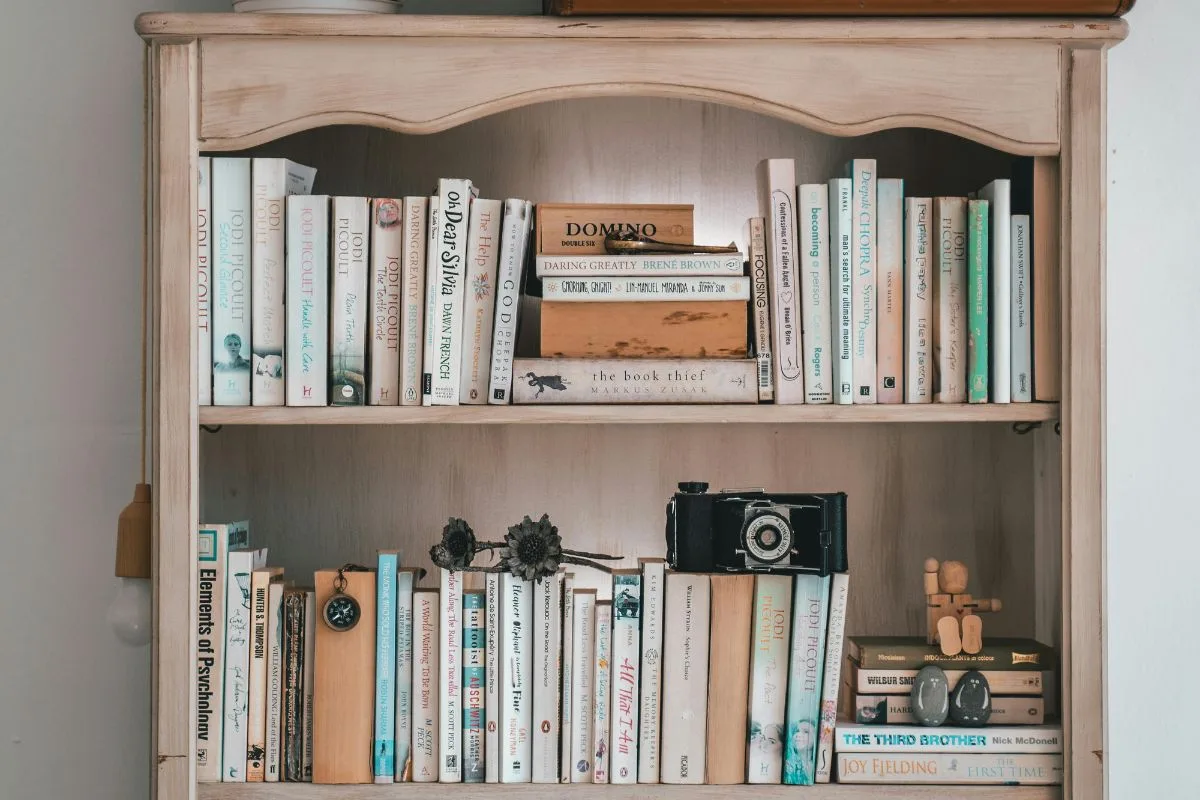
Bookshelfie
book shelf·ie (n.): a photo showcasing a beautifully curated bookshelf
Book Hoarder
book hoard·er (n.): someone who collects books endlessly, stacking them in every corner, fully believing they’ll read them all… eventually
Serial reader
serial read·er (n.): someone who finishes a book and immediately starts the next, rarely leaving a gap in between, like a literary conveyor belt that never powers down.
Angsticipation
angst·i·ci·pa·tion (n.): the agonizing mix of anxiety and anticipation when a book ends on a brutal cliffhanger, and the next one has no release date in sight
Tsundoku
tsun·do·ku (n.): a Japanese word to describe the act of acquiring books and letting them pile up, often without reading them
Pantser
pant·ser (n.): an author who writes by the “seat of their pants” without planning the plot beforehand
Glowting
glow·ting (v.): the shameless, smug excitement when your favorite author announces a new book—usually accompanied by a happy dance and excessive bragging
Binge-read
binge-read (v.): to read large amounts of material or multiple books in a short period of time
Book Shimmy
book shim·my (n.): that excited little wiggle or happy dance you do when a book is just that good—or when you finally get your hands on a long-awaited read
Perfictionist
per·fic·tion·ist (n.): someone who demands absolute perfection in stories, refusing to tolerate plot holes, weak character arcs, or unresolved endings
Book Sniffing
book sniff·ing (n.): the literary equivalent of getting high, achieved by deeply inhaling the intoxicating scent of books—new, old, or ancient
Afficted
af·fic·ted (adj.): that gut-wrenching sorrow when a book breaks your heart, but explaining it to non-readers would sound ridiculous
Madgedy
mad·ge·dy (n.): the foolish yet inevitable heartbreak of rereading a tragic book and still hoping the ending magically changes
Readathon
read·a·thon (n.): an event, often online, where participants aim to read as much as possible within a set time frame
Bookstagram
book·sta·gram (n.): a community on Instagram dedicated to sharing and discussing books, often featuring aesthetically pleasing photos of books and reading spaces
BookTube
book·tube (n.): a segment of YouTube where content creators (known as BookTubers) produce videos about books, including reviews, hauls, and discussions
BookTok
book·tok (n.): a community on TikTok where users create short videos discussing books, sharing recommendations, and engaging in literary trends
Bookklempt
book·klempt (n.): That lost, emotional state when you finish the last book in a series and can’t bring yourself to start something new
Mehnertia
meh·ner·tia (n.): the weary reluctance to pick up a book you paused too long ago, knowing it’ll take effort to re-immerse yourself in the story
Libricide
li·bri·cide (n.): The unforgivable act of destroying or intentionally getting rid of books
Scrollmate
scroll·mate (n.): an author whose words feel like they were written just for you
Shelfrighteous
shelf·righ·teous (adj.): the unshakable smugness of knowing your bookshelf collection is superior to everyone else’s
Booktrovert
book·tro·vert (n.): someone who prefers the company of books over people and considers a quiet reading nook the perfect social scene
Bookvoyageur
book·voy·a·geur (n.): someone who journeys through books like a traveler explores lands, turning pages instead of paths
Bookquet
book·quet (n.): a bundle of books arranged like flowers, perfect for gifting, decorating, or just showing off your excellent taste in stories
Doublebooking
dou·ble·book·ing (v.): When you say yes to two books at once, juggling them like a bookish flirt
And that’s a wrap! A collection of bookish words that every book lover can keep close, like a favorite bookmark. Use them in conversations, jot them down, or simply smile knowing they exist. These words are little treasures for anyone who loves books. Because at the end of the day, words, just like stories, are meant to be enjoyed and shared.
Save This Post About Bookish Words to Build Your Literary Arsenal