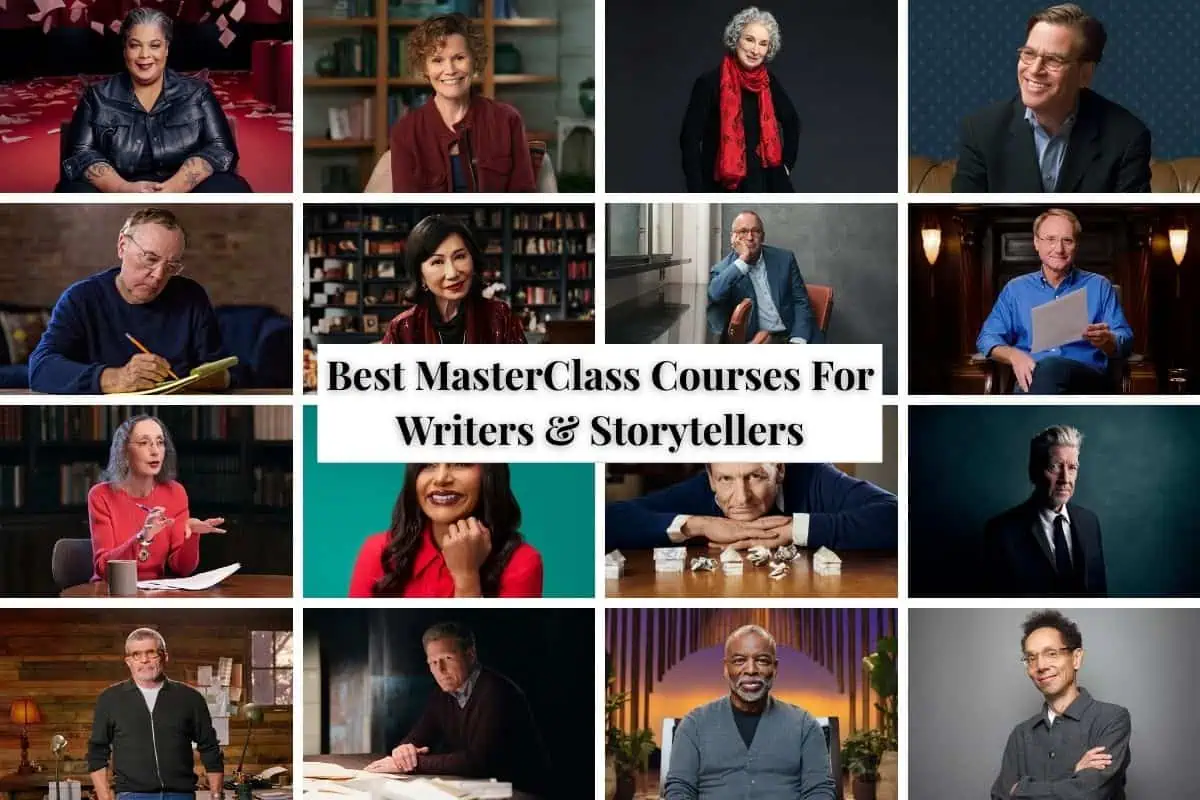
Looking for the best online writing classes to sharpen your craft and finally get those words flowing? MasterClass is the place to do it. If you want to enrich your storytelling or boost your writing skills, here are the five best MasterClass courses for people who care about words. Whether you journal, jot ideas down, or plan to write a book, these classes help you discover new ways to grow as a writer.
Some people write for a living. Some write to make sense of things.
Then there are people like us, the ones who write in our heads while folding laundry or doing the dishes, or leave half-formed thoughts tucked between grocery lists. We don’t always call it writing. But it is.
If you’ve ever paused mid-scroll because a sentence struck something…
If you’ve ever searched for how to tell a great story or how to become a better writer, only to close the tab because it felt too cold or technical, you’re not alone.
I’ve been there too, that’s why I keep returning to MasterClass: it gives practical, creative guidance that always helps me move forward as a writer.
The MasterClass courses feel like quiet, generous conversations, the kind that remind you what drew you to writing in the first place.
Neil Gaiman put it best: “A good story is more than just the words on the page.”
And that’s the thing… these classes help you not just to write but feel the story. Understand what it’s trying to say through you. That’s what pulled me in.
Picture this: an empty coffee cup sits next to your laptop, the only company in a quiet room as the clock ticks past midnight. Writing can indeed feel solitary. Sometimes it’s just you, a blinking cursor, and 47 open tabs pretending to be research.
What MasterClass does really well, especially for writers and storytellers, is remind you that you’re not the only one figuring it out as you go. You hear real writers talk about doubt, blocks, rewrites, and how they sometimes hate their first drafts, too. Like when Neil Gaiman candidly admits, “I rewrite until the story stops wincing.” It’s honest. It’s oddly comforting. And it makes you want to keep going.
Each course feels like being mentored, rather than being lectured. You’re not learning rules you’ll forget in two days. You’re learning how great writers think. How do they edit themselves? How do they notice rhythm? How they start, stop, throw things away, and begin again.
And because each writer teaches differently, with some being wild and whimsical while others are structured and sharp, you get to find an approach that genuinely resonates with you. It’s a choose-your-mentor experience where there’s no ‘right way’ to learn.
This dynamic variety isn’t just a list; it’s the unique benefit, or the ‘purple cow’ (a term from Seth Godin that means something so unique or remarkable that it stands out instantly) that makes MasterClass stand out. With a multitude of perspectives and quiet encouragement, this personalized learning journey is truly a must-try feature.
For storytellers, it’s a goldmine. You learn what makes a story land. How to create tension without yelling. How to say one thing and make the reader feel ten. And that’s the magic we’re all after.
MasterClass isn’t just about video lessons, though yes, they’re gorgeously shot and somehow make even writing theory look cinematic. It’s full of juicy extras: behind-the-scenes drafts, writing assignments from actual authors, and even office hours where you can ask questions. I’ve been secretly terrified to submit one, a kind of vulnerability that leaves me second-guessing my every sentence. But I’ve bookmarked the idea for a future day when confidence meets caffeine.
It’s like a treasure chest, no map or warning, right there on my screen: legends of every craft, teaching what they know best with such ease that it makes you pause every few minutes and think, “Wait, I didn’t know that.”
I mean, learning storytelling from Neil Gaiman while sipping chai at my desk? That’s not a course, that’s magic. Watching Joyce Carol Oates break down emotional depth in fiction while I’m in my pajamas, half-done with dinner? Priceless.
I signed up for the annual plan, and with just that, I got access to every single MasterClass. Not just writing and storytelling (though that’s what pulled us in), but omg… there’s everything from filmmaking to fashion design to entrepreneurship to health and wellness, even interior styling and photography and whatnot.
It’s like opening a creative candy store and suddenly, I’m reaching for flavors I didn’t know we craved.
Mini-me has inherited my thing with stories. She has an affinity for them. It’s still raw, but I see it. The way she listens to pauses. The way she plays with ideas.
And that’s why I gifted her a MasterClass subscription. Yes, you can actually gift it, whether it’s to a friend who’s always scribbling in notebooks, a parent who secretly wants to write their memoir, or even to yourself (because sometimes the best gifts are the ones we keep).
Gift MasterClass: Because the Gift of Learning Lasts Forever
200+ classes, thousands of lessons, and a year of learning from the world’s best, this is a gift that doesn’t fade or gather dust.
And somewhere in the middle of cheering her on, I had to admit: mine’s still raw too.
Even after years of blogging and freelance writing, I never had formal training. No fancy MFA. No big mentor. So when I found Neil Gaiman and Roxane Gay on MasterClass, it felt like pulling up a chair next to them and finally getting to ask what makes a sentence land. How to create tension without shouting. How to make a story feel like it belongs to the reader.
There’s this line Gaiman says about being specific and how that one shift can change everything. I tried it. I swapped “a busy street” in my draft with “a frantic, honking street on a scorching summer afternoon, people darting like sparrows across glistening asphalt.”
It clicked. The sentence opened up.

Neil Gaiman’s The Art of Storytelling was easily one of the best MasterClass writing courses. Gentle. Messy. Full of quiet truths that make you want to write again. At one point, he says, “You’re allowed to write badly. Just keep going.” And I remember thinking, okay, then maybe I will. The class is no longer available (I wish I’d saved every frame). Still, I’ll leave the mention, a small tribute. What he shared shaped how I write and think. Maybe, one day, it’ll return. For now, I carry it with me.
It was a quiet kind of bingo.
Now, I don’t take many things seriously. But words… well, those are sacred. Finding mentors like Gaiman, Gay, Atwood, Judy Bloom, and the like, who share their genuine, unpolished take on storytelling, is rare. It’s gold.
It doesn’t matter if you’re writing novels, blog posts, personal essays, or voice notes you never send. If you care about words, MasterClass meets you where you are and gives you something to take back with you.
If you love learning, want inspiration from the best, and need a little push to keep writing, try MasterClass. It’s been a game-changer for me and could be for you, too.
Step in, press play, and write on.
Why not embark on your own journey and ‘Learn Inspired’? It’s a call to action you’ll want to share with everyone.
Here’s a handpicked list of courses that helped me reconnect with why I write at all.
Pick one. Watch a lesson. Then try this: write a 100-word opening by tonight, just for yourself. Or share it. Invite someone in. Let the words take you somewhere.
Best MasterClass Courses for Aspiring Writers & Storytellers
Margaret Atwood Teaches Creative Writing
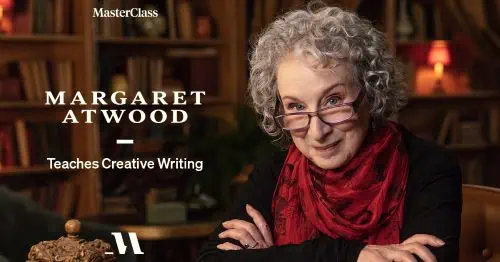
I expected writing tips, but found something more profound — a seasoned perspective guiding you through every phase of a writer’s journey: blocked, bored, burnt out, or hopeful. It’s a gentle push toward rediscovering why you write.
Atwood is just quietly brilliant. She talks to you as if you already have something worth saying; you need help bringing it out.
She covers where to begin, how to move forward when you’re stuck, and how to trust your instincts. She simplifies concepts such as point of view, structure, character depth, and how to conclude a story without forcing it.
She said, “You become a writer by writing.” And honestly, that’s it. You just keep showing up to the page, even when it feels messy or small. Just the act of doing it, again and again, like most things in life. The daily grind, the same routine, the lethal routine.
Her course is slower, more reflective. It’s about writing real, not writing fast.
If you value thoughtful lessons that rekindle your passion or help you find your writing rhythm again, this course is designed for you.
And yes, the workbook is solid. The assignments actually help. You leave each lesson wanting to write, not because she told you to, but because you suddenly feel like you can.

Michael Lewis on How to Tell a Great Story (Mini-Series)

A good story can do more than pass the time. It can grab someone’s attention, shift the way they think, or make them care about something they didn’t five minutes ago.
Michael Lewis, the bestselling author of Moneyball, The Big Short, and Going Infinite, knows how to do precisely that. And in this MasterClass series, he shows you how.
Across four short episodes, Lewis pulls apart the craft of storytelling and makes it practical. In the first, he demonstrates how to uncover the human drama within something as mundane as numbers or statistics.
He says, “A story is just a way of organizing information that makes people care,” and when you hear him explain it, even a spreadsheet starts to look like a plot.
In the second, he leans on his own books to show how storytelling doesn’t live only on the page. The same skills can help you in a speech, a pitch, or even just making small talk that people remember.
The third episode focuses on endings, because as he puts it, “If you don’t know where you’re going, neither will your reader.” He discusses routine, consistency, and how to secure a story so it remains.
The final bonus episode takes storytelling beyond books, as he sits with a nonprofit leader to demonstrate how crafting the correct narrative can inspire people to take action. It’s proof that storytelling isn’t just an art form, but also a powerful tool for persuasion.
This isn’t a long course with endless modules. It’s four sharp episodes you can watch in an evening, and they’ll leave you looking at stories differently, whether you’re writing, speaking, or just trying to explain your day in a way that makes someone lean in. Ready to dive into the art of storytelling with this incredible MasterClass storytelling course?
Roxane Gay Teaches Writing for Social Change
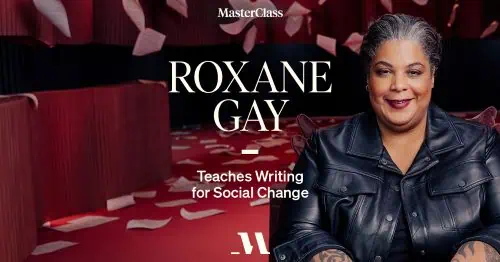
This one’s not a soft, cozy writing class. It hits different.
Roxane Gay teaches you to write with heat, heart, and hurt. Her guidance provides you with the skills to tackle tough topics, write authentically, and deeply engage readers.
She skips fluff or polite detours and dives into what it means to write about things that matter: identity, injustice, discomfort, truth.
She blends personal storytelling with cultural critique so naturally that it makes you pause mid-lesson and rethink everything you’ve read or written.
You learn practical techniques for developing your unique voice, making bold statements clearly, and staying honest, skills you can apply to personal essays, opinion pieces, or any writing with impact.
This isn’t a blueprint class. It’s a wake-up call in the best possible way. Roxane reminds you that your story matters. Your voice can be sharp and tender. Writing can be activism, even if it begins in silence.
So take what you learn here and put your voice on the page and start writing what matters today.
Get Every MasterClass With One Membership
$120 a year. That’s it. And you get all the writing classes. From “I think I have an idea” to “wow, I actually wrote that,” they’ve got you. (30-day guarantee included. But we doubt you’ll need it.)
Amy Tan Teaches Fiction, Memory, and Imagination
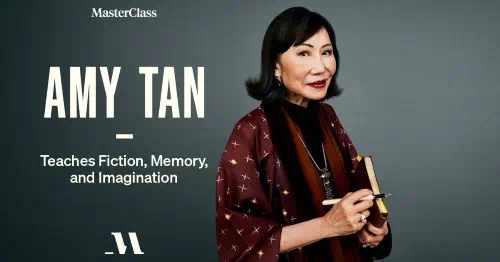
This class feels like sitting with someone who’s spent years listening to her past, to her mother’s voice, to what was left unsaid. Now, she’s calmly teaching you how to listen, too.
Amy Tan teaches that remembering is the first step to building a story.
She shows how memory, whether blurry or vivid, fuels fiction that encompasses grief, belonging, language, and silence, making stories emotionally real and grounding.
She shares how her own life shaped The Joy Luck Club, including the quiet grief, her immigrant roots, and the complicated bond between mothers and daughters.
You don’t need big drama to write, just small truths. Amy Tan reveals the truths hidden in routines, family conversations, and unspoken feelings, showing that even partial memories can bring honesty to your writing.
The course reveals how many untold stories we carry, often unnoticed.
She teaches you to use imagination while staying connected to your own experience, so you write stories only you can tell. This makes your writing more unique and personally meaningful.
Her writing is less about technique and more about trust, trusting that your memories are worth sharing. If you’ve felt your life isn’t “big” enough to write, Amy Tan will prove you wrong.

Shonda Rhimes Teaches Writing for Television
You don’t need to be a screenwriter to learn from Shonda. What she teaches helps anyone. Want your words to hit harder? Hold attention? Carry emotion? Land? She shows you how.
Building on her universal approach, she explains how to create authentic characters, meaningful scenes, and stories that flow like a long-awaited conversation.
For example, she shares one exercise, “the three-word story,” that really stuck with me. Pick any scene and boil it down to three words. That’s it. Somehow, it makes you write sharper. It shows what matters and what doesn’t.
All of this comes without big terms or abstract theory. It’s just solid advice from someone who knows exactly how to hold an audience.
Another lesson lands when she says, “Know your characters better than they know themselves.” You feel it. You pause and think, do I? If not, why am I even writing them?
After her class, I began writing down something my character would never admit: a fear, a flaw, something raw and unfiltered. That slight shift changed how I saw every scene.
Even in recent writing, I saw the difference. The characters seemed flat, like outlines. But when I worked with their secrets, everything got tighter. Scenes felt fuller. Dialogue clicked. There was finally something real underneath. All these changes can be traced back to Shonda’s insights.
I’ve returned to her class more than once. It helps every time.
James Patterson Teaches Writing
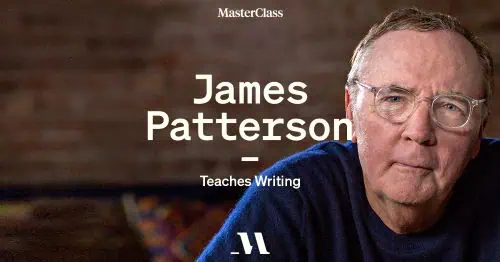
James Patterson’s class exemplifies his teaching style: direct, efficient, and focused on results. As the bestselling author alive, with over 300 million copies sold, Patterson urges students to take action and write.
Every lesson is practical. Patterson teaches you how to go from idea to outline to manuscript without second-guessing every move. He treats structure as essential. His infamous outlines are shared, proving his process is both straightforward and effective.
Patterson openly discusses the realities of the writing business, covering topics such as collaboration, publishing, and pitching. His transparency about industry know-how sets this course apart.
He offers actionable craft advice: how to build engaging characters, write crisp dialogue, and keep the story moving forward. His guidance on first sentences reveals why his books draw readers in from the start.
This class is for writers seeking an actionable roadmap. It’s about moving from dreaming to finishing that novel, step by step, clearly and confidently.
Patterson delivers exactly what he promises: direct guidance, fast-paced lessons, and realistic encouragement to help you finish your book.
Judy Blume Teaches Writing

When I first read Are You There God? It’s Me, Margaret, it felt like someone was finally saying the things I’d been too shy to put into words. That’s what Judy does. She names the awkward, the painful, the everyday moments we all carry. And she does it without apology.
Her MasterClass carries that same honesty. It isn’t boxed into “children’s writing.” It’s for anyone who wants to write characters that actually feel alive. Characters who blush, stumble, snap at their friends, keep secrets, and change in ways that feel real.
She takes on the tricky subjects most writers tiptoe around, such as puberty, jealousy, shame, grief, shifting friendships, and shows how to write them without sounding heavy-handed. One of her most striking reminders: “You don’t write for children. You write about them.” That slight shift changes how you see character and voice.
In one lesson, she breaks down the tension in teenage friendships that’s felt in whispers, glances, and silences that sting harder than words. It makes you realize stories live in those quiet, uncomfortable beats as much as in big events.
The course gives you prompts and exercises, yes, but more than that, it gives you confidence. You walk away writing characters who are flawed and searching, not polished or perfect. Whether you’re working on fiction, memoir, essays, or even blogs, the lessons land.
Judy hands you the courage that makes you sit back down with the page and write the scene you were scared to touch.
In the end, it really comes down to this—if you want to write better, tell sharper stories, or finally finish the draft you’ve been circling, you need two things: practice and guidance. The practice is on you. The guidance? That’s where these MasterClass courses shine.
See, it’s simple: writing doesn’t get easier, but it does get better when you learn from people who’ve already walked the path. Getting to sit in on the thought process of writers like Margaret Atwood, Judy Blume, Roxane Gay, Amy Tan, Shonda Rhimes, and Bob Woodward feels like stealing time with the best.
You don’t just read their books; you learn how they think, how they work, how they fail, and how they keep going. And when you watch them break it down, it makes you want to get back to your own page.
If you care about words, whether you’re writing a novel, journaling at night, or piecing together stories on a blog, these classes remind you that there isn’t one right way to do it. However, there is one essential thing: keep learning and keep writing.
Essentially, they don’t give you tips; they hand you courage, and, I assume, that’s often the most challenging part to find on your own.
So take a class. Learn from the best. And then, close the screen and write down your thoughts. That’s where the real story begins.
It doesn’t matter if the first draft is messy. Every draft is messy. What matters is that you begin. Because the only way to become a writer, as Judy Blume says, is to write. Again and again.
Save These Best MasterClass Writing Classes to Your Creative Board


